


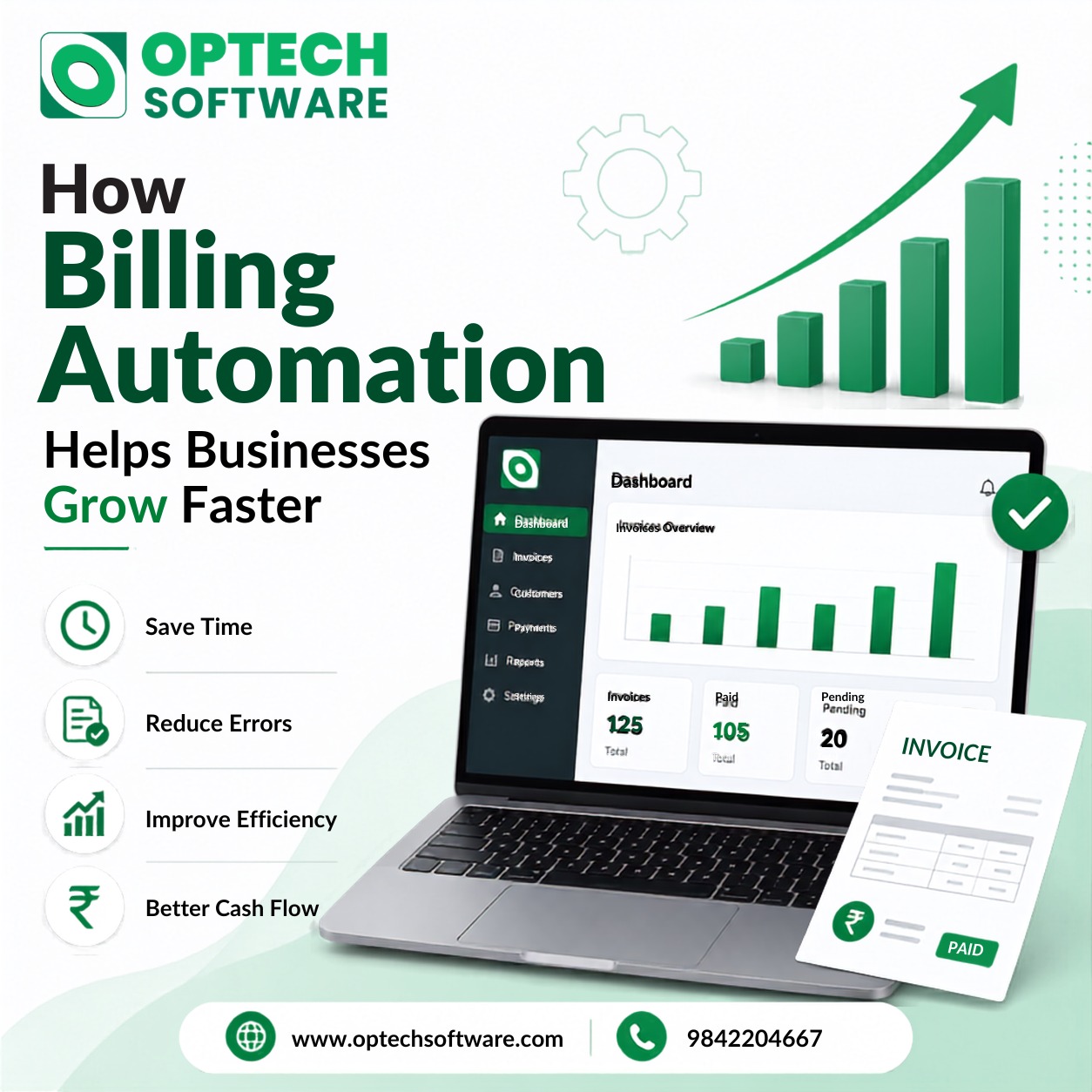
How Billing Automation Helps Businesses Grow Faster
Manual billing is a time-consuming process, errors might happen, and it slows down cash flow. Based on your business scale, the old billing process becomes a burden, rather than a helping hand to grow. This is where billing automation technology helps companies concentrate on their expansion rather than paperwork.
1. Faster Invoicing Cycles:
Billing automation can shorten the time lag between work completed and the request for payment, while also eliminating manual data entry. Automated billing systems can generate and send invoices upon the delivery of a service or once a milestone is completed. This directly affects the speed of a business's cash turnover.
- Real-time invoice generation based on predetermined events.
- Automation of repetitive data entry operations.
- Faster service delivery to billing with reduced turnaround time.
- Automated invoicing, even without manual supervision.
- Recurring invoices for subscription-based services.
- Reduced billing issues during high-volume billing periods.
2. Improved Cash Flow Management:
Quicker and more accurate invoices can result in faster payments. Businesses can gain better visibility into revenue through automation, allowing teams to plan budgets and expenses with greater confidence and reduce unnecessary cash-flow challenges.
- Track outstanding payments in real time.
- Remind customers about overdue payments automatically.
- Forecast revenue for financial planning.
- Reduce dependency on manual payment follow-ups.
- Identify unpaid invoices quickly for proactive follow-up.
- Improve monthly and quarterly revenue forecasts.
3. Minimized Human Errors:
Manual billing can lead to human errors such as duplicate charges, incorrect amounts, or missed invoices. Automation minimizes these risks by standardizing each step of the billing process, from calculation to invoice delivery.
- Preset pricing rules and accurate calculations.
- Fewer duplicate and missing invoices.
- Templated fields to minimize formatting mistakes.
- Built-in validation checks before sending invoices.
- Automatic identification and correction of discrepancies.
- Consistent application of discounts, taxes, and fees.
4. Enhanced Customer Experience:
Customers expect clarity and detailed information when it comes to billing. Automated systems help build trust by providing transparent and smooth transactions for both sellers and buyers, reducing friction throughout the billing process.
- Multiple payment methods for customer convenience.
- Automated receipts and payment confirmations.
- Customer self-service portals with billing history.
- Minimized billing disputes through accurate documentation.
- Timely and consistent invoice communication with customers.
5. Scalability For Growing Businesses:
As businesses grow from small to larger organizations, their billing volumes increase. Automation allows billing systems to manage higher volumes without additional manual effort or operational strain. This enables teams to focus on strategic business activities instead of repetitive administrative tasks.
- Handle large volumes of invoices with ease.
- Support multiple currencies and tax options.
- Easy integration with CRM and accounting software.
- Reduce the need for additional administrative staff.
- Adapt billing models as business requirements change.
- Support expansion into new markets and business units.
6. Data-Driven Decision Making:
Billing automation platforms also provide reporting features that offer businesses valuable insights into revenue trends, payment patterns, and customer behavior. These insights help businesses make informed decisions for long-term planning and resource allocation.
- In-depth data on payment trends.
- Insights into customer lifetime value.
- Better visibility into recurring revenue.
- Reports that support strategic financial planning.
- Trend monitoring to predict upcoming invoice cycles.
- Enhanced data visibility and improved pricing opportunities.
7. Regulatory Compliance And Security:
Automated billing systems can assist businesses in complying with government tax laws and data protection regulations. This helps reduce legal risks while ensuring that sensitive financial information remains protected.
- Automatic tax calculation based on applicable jurisdictions.
- Secure storage of sensitive billing information.
- Maintain an audit trail of billing transactions.
- Minimize potential compliance issues.
- Simplify reporting during audits and regulatory reviews.
- Maintain consistent billing standards and processes.
Conclusion
No matter how big, medium, or small a company is, businesses looking to improve their growth can benefit from having the best billing software. It can save time, minimize errors, improve cash flow, and strengthen customer relationships. With the right billing automation solution, businesses can streamline their operations, focus on expansion, and continue to grow efficiently.
